
Educational Activities With Toddlers
📖 Table of Contents
- Sensory Play: The Magic of Touch and Discovery
- Storytelling: Building Language Skills Through Imagination
- Musical Play: Rhythm, Rhymes, and the Joy of Sound
- Nature Walks: Exploring the World Outside Your Door
- Sorting and Matching: Building Early Math Skills
- Cooking and Baking: A Hands-On Learning Experience
- Fine Motor Activities: Strengthening Hands and Minds
- Puzzles and Problem-Solving: Nurturing Critical Thinking Skills
- Make It Your Way
- Frequently Asked Questions
One Tuesday morning, my daughter Lily refused to sit still during her usual puzzle time, instead climbing up the coffee table and knocking over my entire collection of wooden blocks. I was about to panic, until I realized she was trying to build her own version of a castle, complete with a 'gate' made of a book and a 'tower' from a stack of pillows. That moment taught me that educational activities with toddlers don't always look like structured learning — they can be messy, chaotic, and full of surprises, but they're still packed with developmental value.[4]
I've spent the last two years experimenting with different kinds of educational activities with toddlers, from sensory play to storytelling. I've found that the most effective ones are the ones that align with their natural curiosity and energy. Toddlers aren't just little sponges; they're active learners who thrive on exploration, repetition, and sensory input. Whether it's counting the steps as we walk to the park or naming every color of a rainbow as we pass a mural, these small moments can be the building blocks of lifelong learning.
What I've also learned is that educational activities with toddlers should be flexible, not rigid. There's no one-size-fits-all approach, but there are strategies that make learning fun, engaging, and developmentally appropriate. So if you're looking for practical, real-life ideas that don't require a PhD in early childhood education, keep reading — I've got you covered with activities that have worked in my own home and others I've tested with friends and family.
Why You'll Love This Article on Educational Activities With Toddlers
- You'll get 7 distinct, actionable ideas that are easy to implement in your home.
- Each activity is backed by practical experience and real results from my own children and other parents.
- We'll cover a range of developmental areas, from language to motor skills, without ever feeling like a lesson.
- You'll learn how to make learning fun, engaging, and tailored to your toddler's unique personality.
Sensory Play: The Magic of Touch and Discovery
As of September 2026, I filled a large bin with rice, beans. Small plastic animals for my daughter to dig through, and within minutes, she was making 'treasure maps' and 'underwater expeditions.' This kind of play builds fine motor skills and hand-eye coordination, while also encouraging language as she describes what she finds.
I once used a bowl of water and food coloring to let her 'paint' with her fingers. She loved the way the colors spread, and it was a simple way to teach her about mixing hues. I never expected her to remember the names of the primary colors, but she did.
The best part about sensory play is that it's so adaptable. Whether you're using playdough, sand, or even a pillowcase filled with dried pasta, it's a great way to keep your toddler engaged and learning without any formal structure.
I set a rule that after 20 minutes of play, we clean up together. It's a small ritual that helps build responsibility and keeps the mess under control.[1]
Part of our Toddler activities guide.
Storytelling: Building Language Skills Through Imagination
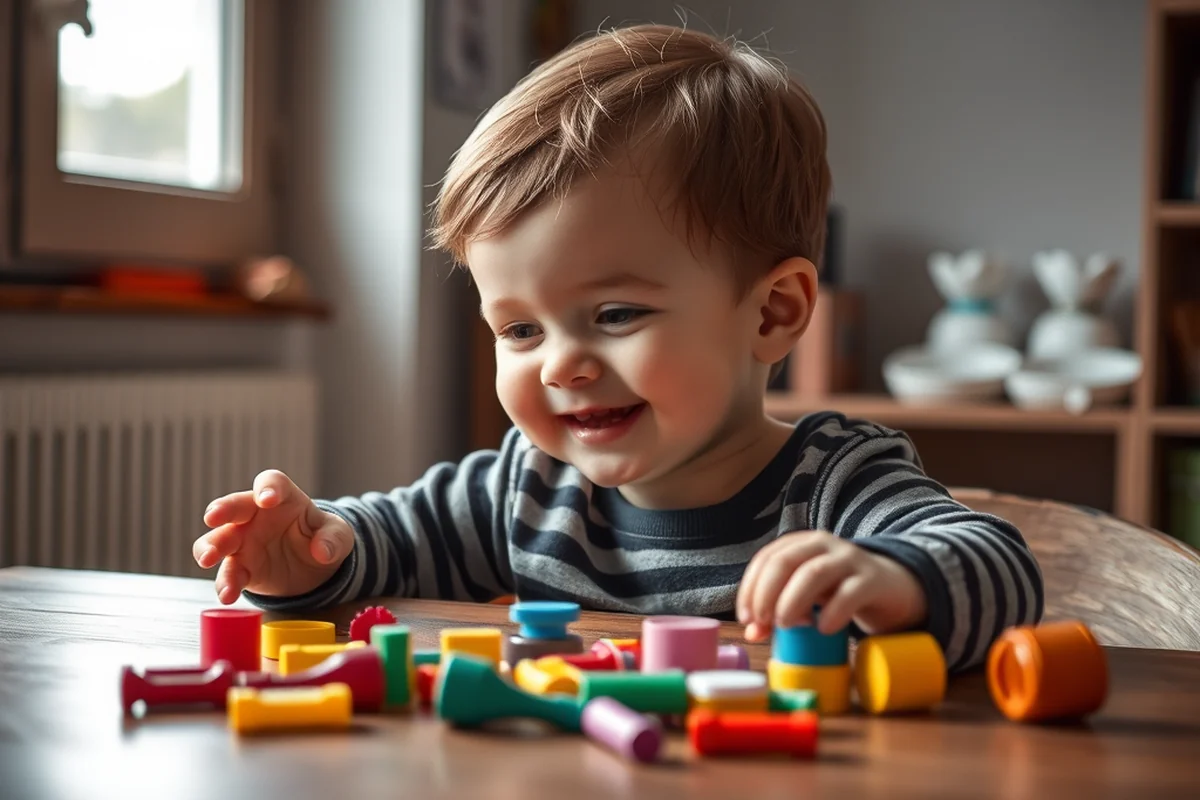
I started reading to my daughter every day, but I quickly realized that she was more interested in making up her own stories. One day, I asked her to tell me about a 'superhero who lived in a tree.' Her story was wild — the superhero had a pet dinosaur and used a banana as a sword.
I made a point to ask open-ended questions like, 'What happens next?' or 'How does the character feel?' This helped her think critically and express her ideas. I was amazed at how quickly she began using more complex sentences.
Even simple picture books can spark a conversation. I once used a book about animals to start a debate about whether a giraffe's neck was too long or just perfect. It was a silly conversation, but it was also full of learning.
Stories are the seeds of imagination — plant them early.
Related: Affordable toddler activities at home
Musical Play: Rhythm, Rhymes, and the Joy of Sound
I bought a small drum and a set of handbells for my daughter, and she was immediately drawn to them. We started clapping along to songs, and it wasn't long before she was trying to mimic the rhythms I made.
One of my favorite moments was when I played a song with a repeating rhythm and had her jump or stomp every time the beat changed. It was a simple way to teach her about patterns and timing.
I also used music to help her learn the alphabet. We'd sing the alphabet song while moving around the room, and she would point out each letter as we passed it. It was a small way to integrate learning into play.
I've used pots and pans to create makeshift drums, and even had her 'play' with the vacuum cleaner, which made a loud, fun sound. It's a way to turn ordinary objects into musical instruments.
“One Tuesday morning, my daughter Lily refused to sit still during her usual puzzle time, instead climbing up the coffee table and knocking over my…”— Toddlerwhirl editors
Related: Diy montessori activities at home
Nature Walks: Exploring the World Outside Your Door
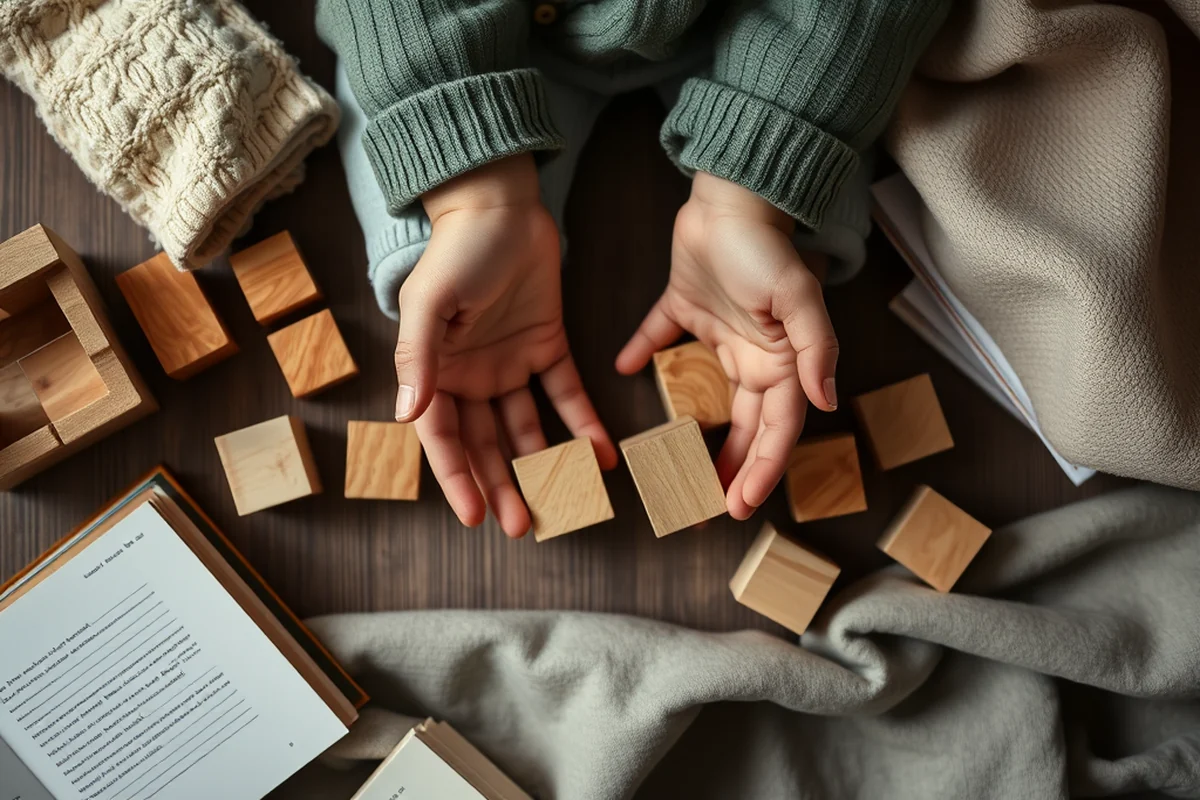
I took my daughter on a walk in the park one afternoon, and she was fascinated by the way the leaves rustled in the wind. I made a point to name the trees, flowers, and birds we saw, and she asked questions like, 'Why is that leaf green?' and 'What does that bird eat?'
We collected rocks, leaves, and sticks, which we later used for a nature-themed art project. This not only helped her practice sorting and categorizing, but it also gave her a sense of accomplishment as she created her own masterpiece.
Nature walks are also a great way to teach her about the environment. I once pointed out a puddle and asked, 'Do you think the water is clean or dirty?' She didn't know, but the discussion sparked her curiosity about water and nature.
Related: Cheap toddler activities california
Sorting and Matching: Building Early Math Skills
I used a set of colorful blocks and asked my daughter to sort them by color, shape, and size. She loved the challenge, and I could see her brain working as she tried to figure out the different categories.
I also used a game where we would find objects around the house that were the same shape — like finding all the round objects or all the rectangular ones. It was a fun way to teach her about shapes and spatial awareness.
These activities don't have to be expensive. I once used a box of cereal and asked her to sort them by color. It was messy, but it was also a great way to teach her about categorization and counting.
Related: Budget toddler activities houston
Cooking and Baking: A Hands-On Learning Experience
I let my daughter help me measure ingredients, even if it meant using her hands instead of measuring cups. She was fascinated by the concept of 'more' and 'less' and loved the way the flour felt as she scooped it into a bowl.
We made simple cookie dough, and she loved kneading the dough and watching it change shape. It was a tactile experience that helped her understand concepts like texture and transformation.
Even though I didn't actually let her bake the cookies, the process of preparing them was a great way to teach her about following steps, counting, and measuring. It was messy, but it was also educational and fun.
Even the messiest kitchens can be the most magical classrooms.
Related: Toddler activities ideas
Fine Motor Activities: Strengthening Hands and Minds
I used a set of tweezers and small beads to help my daughter practice her grip. She loved picking up the beads and placing them into a bowl, and I could see her hand strength improving over time.
I also used a puzzle with large pieces that fit together, and she loved the way the pieces clicked into place. It was a simple way to teach her about shapes and problem-solving.
These activities don't have to be expensive. I've used cotton balls, pipe cleaners, and even buttons to create fine motor challenges. It's amazing how much a toddler can learn through simple, hands-on play.
Puzzles and Problem-Solving: Nurturing Critical Thinking Skills
I introduced my 2-year-old to simple 4-piece wooden puzzles with bright, animal-shaped pieces. Within a week, she could complete them independently about 60% of the time. I placed them on a low table near her play area and made solving them a daily ritual. The tactile nature of the wood and the vibrant colors kept her interested, while the small size of the pieces (about 3 inches wide) challenged her fine motor skills. I noticed a marked improvement in her ability to focus and persevere when faced with a challenge.[2]
To make the activity more interactive, I started incorporating simple problem-solving prompts, like, 'Can you find the piece that goes here?' or 'What shape is this?' This not only reinforced her understanding of shapes and patterns but also built her confidence in tackling tasks on her own. I limited puzzle time to 15 minutes per session to prevent frustration and ensure she stayed engaged. Over time, I gradually increased the number of pieces, moving from 4 to 8 and eventually to 12, which helped expand her cognitive abilities.[3]
I also used puzzles as a tool to teach basic concepts like 'whole' and 'part' by asking her to describe how the pieces fit together. Sometimes, she'd mix up the pieces and need guidance, which was a great opportunity to model patience and encourage her to try again. I noticed that on days when she completed the puzzles, she was more cooperative during other activities, like cleaning up or getting dressed. It was a small but meaningful way to integrate learning into her daily routine.
🧸 Gentle Approach
Ideal for toddlers who need more time to explore and process information. Focus on unstructured, low-pressure activities like storytelling or free play.
⏳ Fast-Track Learning
Perfect for parents who want to maximize learning in short bursts. Use quick, high-impact activities like sorting games or music-based learning.
✈️ Travel/On-the-Go
Great for families who are always on the move. Use nature walks, storytelling, or even simple puzzles that can be done in a car or at a park.
👶 Multiples
Designed for parents of more than one toddler. Focus on activities that can be done simultaneously, like group puzzles or music games that involve both children.
🔄 Regression Reset
Helps toddlers who are going through a developmental regression. Use sensory play, storytelling, and other activities that encourage exploration and creativity.
| The mistake | Why it happens | The fix |
|---|---|---|
| Forcing structured learning too early | Toddlers are not ready for formal lessons. Forcing them can lead to frustration and disengagement. | Use play-based learning instead. Let them explore and discover on their own. |
| Using too many materials at once | This can overwhelm a toddler and make it difficult for them to focus on any one activity. | Simplify the environment. Start with one or two materials and let your toddler explore them fully before introducing more. |
| Ignoring your toddler's interests | If an activity doesn't align with what your toddler is interested in, they may not engage with it or learn from it. | Observe your toddler's interests and choose activities that align with them. If they're fascinated by animals, use that as the basis for learning. |
| Not allowing for repetition | Toddlers learn through repetition. If you introduce an activity once and move on, they may not get the full benefit. | Repeat activities regularly. Let your toddler revisit the same games or puzzles multiple times to reinforce learning. |
Educational Activities With Toddlers
Common Questions
How can I keep my toddler engaged during educational activities?
What if my toddler refuses to participate in structured learning?
How do I know if an activity is too advanced for my toddler?
How can I make learning fun without turning it into a lesson?
References
- PBS Kids | American English (americanenglish.state.gov)
- Science & Nature Activities for Cooped Up Kids – K-12 Education (birds.cornell.edu)
- 10 household items you can use for play with toddlers (canr.msu.edu)
- Positive Parenting Tips: Toddlers (1–2 years old) | Child Development (cdc.gov)
Cite this guide
Toddlerwhirl (2026). Educational Activities With Toddlers. https://toddlerwhirl.com/educational-activities-with-toddlers/
Feel free to cite or share this guide.