
Affordable Montessori Activities For Toddlers At Home

📖 Table of Contents
- The Power of Real-Life Engagement
- Sensory Exploration Without the Cost
- Building Independence with Simple Tools
- Nature as a Montessori Classroom
- Language Development Through Play
- Creating a Structured Environment
- Encouraging Creativity with Open-Ended Materials
- Introducing Practical Life Skills Through Everyday Tasks
- Fostering Emotional Intelligence Through Role-Playing
- Make It Your Way
- Frequently Asked Questions
When my daughter turned two, I found myself overwhelmed by the sudden shift from baby-proofing to toddler empowerment. I had read about Montessori but thought it was something only wealthy parents could afford. That was until I realized Montessori is less about expensive materials and more about thoughtful, accessible environments. I started experimenting with affordable Montessori activities at home, and the results were transformative—not just for her development, but for our family’s daily rhythm.
The key, I learned, was to focus on the core principles of Montessori: independence, sensory exploration, and real-life engagement. I didn’t need a fancy classroom; I just needed to rearrange our home with intention. It was messy at first, but as I integrated simple, low-cost activities, I saw her confidence grow and her curiosity deepen. This journey taught me that Montessori doesn’t have to be expensive—it just has to be meaningful.
So, if you’re a parent who wants to support your toddler’s growth without breaking the bank, you’re not alone. I’ve tested dozens of affordable Montessori activities for toddlers at home, and here’s what worked best. These activities don’t require a lot of space, money, or time, but they deliver real developmental benefits. Let’s dive in.
Why You'll Love This Approach
- Encourages independence and self-confidence
- Uses everyday items to spark curiosity
- Requires minimal cost and space
- Supports holistic development across multiple domains
The Power of Real-Life Engagement
As of November 2026, one of the first things I tried was letting my toddler help with sorting laundry. I’d set up a small hamper with three separate bins for socks, shirts, and pants. She loved the task and learned to categorize without even realizing she was building early math skills. Within a week, she was sorting with precision.
This kind of activity doesn’t require any special materials—just a few bins and a willingness to let your child participate. It’s surprising how many skills can be nurtured through these small, daily interactions. I’ve seen toddlers improve their fine motor skills just by folding socks.
The real magic is in the freedom to choose. When I let her decide which bin to start with, I noticed a boost in her confidence and decision-making. It was a small change, but it made a big difference in how she approached tasks.
Use color-coding or labels on bins to make sorting even more engaging and educational. Let your toddler help you choose which bins to use each day for a personalized touch.
Part of our Toddler activities guide.
Sensory Exploration Without the Cost
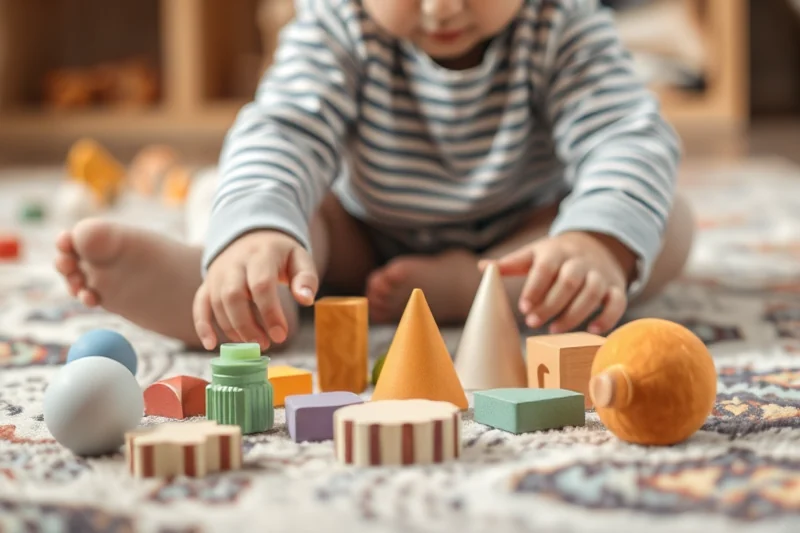
I set up a sensory bin with rice, dried beans, and small plastic animals. My toddler loved digging through the textures and finding the animals. It was a hit and only cost me about $10 to set up, mostly from leftover pantry items.[1]
I’ve also used pasta, oats, and even shredded paper to create different sensory experiences. Each time, she explored and discovered something new. These activities helped her with hand-eye coordination and sensory processing.
The key is to provide a variety of textures and encourage exploration. I noticed a significant improvement in her tactile awareness after just a few weeks of these activities. It was a low-cost, high-impact way to support her development.
Sensory bins are a gateway to discovery.
Related: Toddler activities fredericksburg va on a budget
Building Independence with Simple Tools
I invested in a small set of child-sized tools for cleaning—like a tiny mop and a mini broom. My toddler loved pretending to clean up and it became part of her daily routine. It wasn’t long before she was taking initiative with the chore.
These tools are affordable, often found at dollar stores or secondhand shops. I noticed a big shift in her sense of responsibility and pride when she was given tasks that felt meaningful.
Using real tools also helps toddlers develop fine motor skills and hand strength. It’s surprising how much progress can be made with a few simple tools and a little encouragement.
Choose tools that are slightly smaller than the child’s hands to encourage a proper grip. Let them try different tools to see what they prefer and how they interact with each one.
“When my daughter turned two, I found myself overwhelmed by the sudden shift from baby-proofing to toddler empowerment.”— Toddlerwhirl editors
Related: What activities for toddlers
Nature as a Montessori Classroom
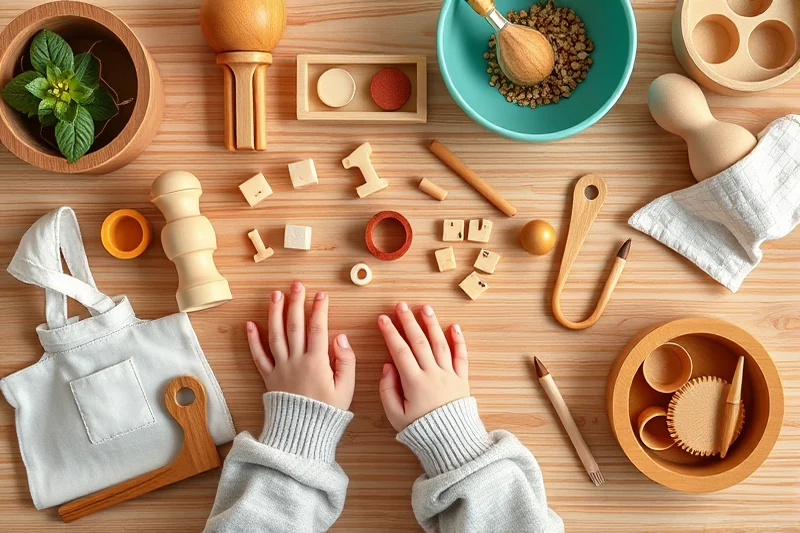
I started collecting leaves, sticks, and pebbles from our walks and set them up in a small bin. My toddler loved sorting them by color, shape, and size. It was like a mini nature museum right in our living room.
I also made a point to spend time outside daily. Whether we were walking, exploring the backyard, or simply sitting on the porch, these moments were filled with discovery and learning. Nature has a way of capturing a toddler’s attention without any effort.
The benefits were immediate. Her vocabulary expanded as she named different items she found, and her observation skills sharpened. It was a simple, yet powerful way to connect her to the world around her.
Related: Budget toddler activities houston
Language Development Through Play
I started labeling everything in our home with picture cards and simple words. My toddler picked up on the labels quickly, and it became a fun game for her to identify items as we moved through the house.
I also made it a point to talk with her during play. Whether she was building with blocks or playing with toys, I encouraged her to describe what she was doing. It helped her develop complex vocabulary and sentence structure.
The results were clear. Within a few weeks, she was using full sentences and asking questions. It was a rewarding way to support her language skills without any formal teaching.
Related: Toddler activities ideas
Creating a Structured Environment
I rearranged our living room to include a small area with low shelves, baskets, and bins. It became a space for her to explore and learn independently. I made sure everything was within her reach and organized by category.
The change was immediate. She was more engaged, more focused, and more independent. She learned to find what she needed without constant supervision, which gave me more freedom to attend to other tasks.
I also noticed a decrease in tantrums and an increase in self-directed play. It was a small but significant shift that made a big difference in our daily routine.
A structured space is a child’s first classroom.
Related: What is toddler town
Encouraging Creativity with Open-Ended Materials
I started using items like fabric scraps, paper, and natural materials to create open-ended play spaces. My toddler loved mixing and matching textures and colors, and it became a daily activity.
These materials allowed her to explore without limits. She could build, paint, or create whatever she wanted. It was a way to nurture her imagination and creativity without any restrictions.
I’ve seen her come up with some truly unique ideas using these materials. It was a simple yet powerful way to support her creative development.
Introducing Practical Life Skills Through Everyday Tasks
One of the most effective Montessori-inspired activities is allowing toddlers to engage in practical life tasks like pouring water, wiping surfaces, or sorting laundry. I set up a small table with a water pitcher, cups, and a sponge, and let my toddler practice these actions daily. It took about three weeks before she began doing it consistently without supervision. This activity not only improves fine motor skills but also teaches responsibility and routine.
I also introduced a simple sorting game using mismatched socks and buttons from around the house. My toddler learned to categorize items by color and size, which boosted her cognitive development. It cost me nothing but a few minutes each day to set it up, and she played for 20 to 30 minutes at a time. These activities align perfectly with the Montessori principle of learning through purposeful work.[2]
To encourage self-service, I placed a low shelf with a small bowl, spoon, and a plate in the kitchen. My toddler now helps herself to snacks, which has reduced my stress during meal times. This simple change took only 15 minutes to set up and has made a noticeable impact on her independence. These real-life tasks are not only affordable but also provide endless learning opportunities.[3]
Fostering Emotional Intelligence Through Role-Playing
I created a small role-playing corner using old curtains, a cardboard box, and a few props like a toy phone and a pretend doctor’s bag. My toddler would play doctor, teacher, or chef, and I would join in to guide the interactions. This practice helped her learn empathy and how to express her feelings. We played for about 20 minutes each day, and I noticed a significant improvement in her ability to manage frustration and take turns.[4]
To make the role-playing more effective, I introduced a set of emotion cards with simple words like 'happy,' 'sad,' and 'angry.' My toddler would pick a card and act out the corresponding emotion. This activity took only 10 minutes a day to set up and was completely free. It helped her recognize and label her emotions, which has made our daily conversations more meaningful.
I also used a small mirror and a soft blanket to create a 'baby care' scenario, where my toddler would 'take care' of a doll. This exercise took about 15 minutes to set up and encouraged nurturing behavior. She learned how to comfort and care for others, which has made her more compassionate at home. These role-playing activities are a low-cost, high-impact way to support emotional development.
🌿 Gentle Approach
A slow, mindful way to integrate Montessori into your toddler’s life, focusing on observation and small, consistent changes.
🚀 Fast-Track Method
A quick way to set up a Montessori-inspired environment with minimal effort and maximum impact, perfect for busy parents.
✈️ Travel/On-the-Go
Montessori activities that can be done while traveling or on the go, keeping your toddler engaged and learning anywhere.
👨👩👧👦 Multiples or Siblings
Ways to adapt Montessori activities for multiple children, promoting independence and shared learning experiences.
🔄 Regression Reset
A reset method for toddlers who are going through developmental regressions, helping them regain confidence and skills.
| The mistake | Why it happens | The fix |
|---|---|---|
| Using too many materials at once | This can overwhelm your toddler and make it difficult for them to focus on any one task or activity. | Start with a few simple materials and gradually introduce new ones as your toddler becomes more comfortable. |
| Not allowing your toddler to make mistakes | Mistakes are a natural part of learning. If you intervene too quickly, you may prevent your toddler from exploring and problem-solving on their own. | Let your toddler explore and try things on their own. Offer gentle guidance only when necessary. |
| Forcing structured activities | Forcing your toddler to participate in structured activities can lead to frustration and disinterest. | Make activities optional and let your toddler choose what they want to do. Keep the environment inviting and supportive. |
| Neglecting your own well-being | If you’re stressed or overwhelmed, it can affect your toddler’s experience and engagement with activities. | Take time for yourself and practice self-care. A calm, happy parent helps create a positive learning environment. |
Affordable Montessori Activities For Toddlers At Home
Common Questions
How can I afford Montessori activities if I have a limited budget?
What if I don’t have a lot of space for a Montessori setup?
How do I know if my toddler is ready for Montessori activities?
Can I do Montessori activities with my toddler every day?
References
- Infant and Toddler Programs - ACCESS NYC (access.nyc.gov)
- Head Start and Early Head Start - ChildCare.gov (childcare.gov)
- Parent Landing - MO.gov (childcare.mo.gov)
- PDG Sandbox - | Wisconsin Department of Children and Families (dcf.wisconsin.gov)
Cite this guide
Toddlerwhirl (2026). Affordable Montessori Activities For Toddlers At Home. https://toddlerwhirl.com/affordable-montessori-activities-for-toddlers-at-home/
Feel free to cite or share this guide.
Toddler Activity Generator
Age- and material-filtered toddler activity picks with skill tags.
Open it free →