
Simple Toddler Activities for Each Stage of Development

📖 Table of Contents
- Motor Skills: The Building Blocks of Growth
- Language Development: Speaking in Tongues
- Sensory Play: Exploring the World Through Touch
- Social Skills: Learning to Share and Play
- Emotional Regulation: Learning to Feel and Manage Feelings
- Creative Play: Exploring Imagination and Expression
- Fine Motor Skills: The Tiny Movements That Matter
- Make It Your Way
- Frequently Asked Questions
I remember the day my daughter turned two — she was obsessed with pushing everything off tables, saying 'no' to every suggestion, and demanding attention in the most dramatic way possible. We were in a constant loop of 'I want that!' and 'No, that’s not safe!' I was exhausted. The idea of finding 'simple toddler activities for each stage of development' felt like climbing a mountain. But over time, I realized that the key was to match the activities to her current developmental phase. That’s how I started this journey — not with a list of 'shoulds,' but with a few small, manageable activities that fit our lives.[3]
As I experimented with different approaches, I noticed that the right activities didn’t just keep her busy — they helped her grow in ways I hadn’t anticipated. Whether it was improving her motor skills, expanding her vocabulary, or teaching her to share, the right activity for her stage of development made all the difference. I started keeping a log of what worked and what didn’t. That’s how I began to see a pattern: simple toddler activities for each stage of development could be tailored to their unique needs — and they didn’t require a lot of time or resources.[4]
Now, I’ve curated a list of activities that have worked for my daughter and others in the Toddlerwhirl community. These are not fancy, expensive, or complicated — they are things you can do with the materials you already have, and they’re designed to support each stage of development. Whether your toddler is just learning to walk, talking in full sentences, or starting to show interest in art, there’s a place for them here. The goal isn’t perfection — it’s progress.[5]
Why You'll Love This Approach to Toddler Development
- Activities are tailored to specific developmental stages, ensuring they’re both engaging and effective.
- Most require common household items, so you don’t need to spend a lot to make learning fun.
- They’re designed to be short, so they work even in the busiest days.
- They help build skills that matter — from motor control to emotional regulation.
Motor Skills: The Building Blocks of Growth
As of November 2026, I used to think that my toddler needed a gym or specialized equipment to build motor skills. But after trying a few simple activities, I saw a huge shift. One of the best was stacking blocks — not just any blocks, but the ones that are lightweight and safe for small hands. My daughter would sit for 20 minutes trying to stack them, and by the end, she had improved her hand-eye coordination and balance. It’s amazing how much you can achieve with a few toys and a little patience.[1]
I also tried rolling a ball back and forth with her, which was a hit. At first, she would just kick it, but after a few days, she started to aim it toward me. It wasn’t just fun — it helped her learn how to follow objects with her eyes and track movement, which are essential motor skills. This kind of play is especially good for toddlers who are just learning to move around independently.
I realized that the key was to keep the activities low-pressure and high-reward. Whether it was building with blocks or chasing a ball, the focus was on her enjoying the process and learning along the way. These are the kinds of activities that make 'simple toddler activities for each stage of development' feel achievable and rewarding.
Use large, soft blocks and sit on the floor with your toddler to encourage eye contact and interaction. Praise them every time they successfully place a block.
Part of our Toddler activities by age stage guide.
Language Development: Speaking in Tongues

I used to think that my toddler would learn to talk just by being around me. But after a few months of minimal progress, I realized that I needed to be more intentional. One of the most effective activities I tried was 'I Spy' — it’s a game where you name objects and describe them, like 'I spy something red' or 'I spy something that makes a sound.' It was simple. It worked wonders.
We started playing it during car rides and while doing simple tasks like folding laundry. My daughter would start naming objects in her own way, and slowly, she began to understand what I meant. It wasn’t just about learning new words — it was about learning to communicate and think critically.
Another activity I tried was reading picture books every night. At first, she would just point and laugh, but over time, she started to say the names of the animals and the colors. It wasn’t just about learning — it was about bonding. These activities became part of our daily ritual, and I saw a huge improvement in her language skills.
Words are the first step to connection.
Related: Diy toddler activities by age stage
Sensory Play: Exploring the World Through Touch
I had no idea how powerful sensory play could be until I tried it. I filled a shallow container with water and a few plastic cups for my daughter to play with. She was fascinated — she would pour the water from one cup to another and watch it splash. It was messy, but it was also incredibly educational. She was learning about cause and effect, and she was having fun doing it.
Another time, I used a bag of rice and a small bowl for her to scoop and pour. She loved the texture and the way the rice moved through her fingers. I realized that these simple activities weren’t just play — they were helping her understand the world in a new way. It was a revelation that sensory play could be so effective for her development.
I’ve since learned that sensory activities are especially important for toddlers who are still learning how to process the world around them. They help with fine motor skills, cognitive development, and even emotional regulation. These are the kinds of activities that make 'simple toddler activities for each stage of development' feel like a natural part of everyday life.
Use containers with different textures, like sand, water, or rice. Let your toddler explore with their hands and describe what they feel. Keep it fun and positive.
“I remember the day my daughter turned two — she was obsessed with pushing everything off tables, saying 'no' to every suggestion, and demanding attention…”— Toddlerwhirl editors
Related: Toddler activities stage for beginners
Social Skills: Learning to Share and Play
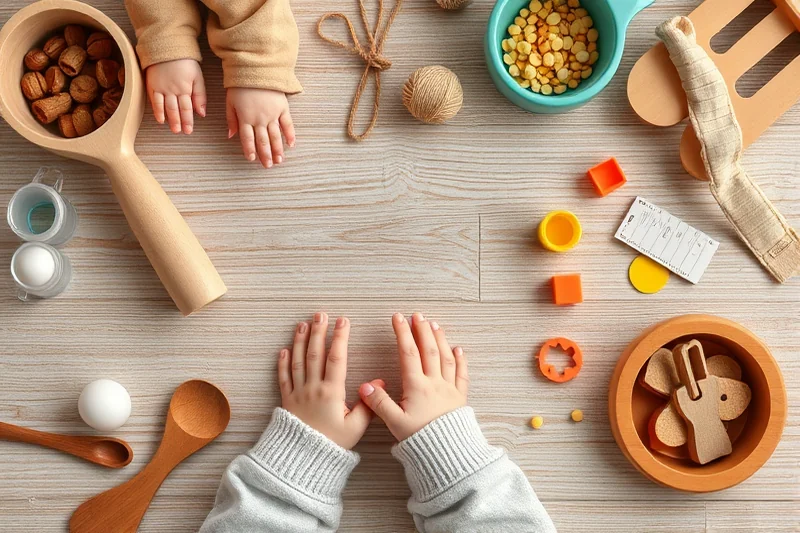
I used to think that my daughter would learn to share naturally, but I was wrong. She was very possessive of her toys, and it was challenging to get her to play with others. One day, I decided to invite a friend over for a playdate. I didn’t have a specific plan — I just set out a few toys and let them play together.
To my surprise, the two of them started talking and sharing. It wasn’t perfect, but it was a start. I realized that social skills didn’t come from lectures — they came from practice. I started setting up more playdates and even joined in with them, encouraging them to take turns and share. It didn’t always go smoothly, but over time, my daughter started to understand the idea of sharing and playing with others.
I’ve since learned that group play is essential for toddlers who are learning to interact with others. It helps them develop empathy, learn how to communicate, and build confidence. These are the kinds of activities that make 'simple toddler activities for each stage of development' feel like a natural part of growing up.
Related: Toddler activities stage printable
Emotional Regulation: Learning to Feel and Manage Feelings
One of the hardest parts of parenting was watching my daughter lose her temper over the simplest things. She would throw a tantrum over not getting her favorite toy or not wanting to wear a certain outfit. I tried everything — time-outs, redirection — but nothing seemed to work. Then I discovered emotion cards, and it changed everything.
These cards have pictures of different emotions, like happy, angry, sad, and excited. I would show them to my daughter and ask her how she felt. At first, she didn’t understand, but after a few days, she started recognizing her own emotions. It was a breakthrough — she could now name her feelings and even talk about them.
I’ve since learned that emotional regulation is a key part of development, and it’s not something that just happens. It requires practice and support. These are the kinds of activities that make 'simple toddler activities for each stage of development' feel like a natural part of everyday life.
Related: Quick toddler activities stage
Creative Play: Exploring Imagination and Expression
I used to think that my toddler didn’t have the attention span for creative activities. But I was wrong. One day, I set out some crayons and paper, and to my surprise, she spent 20 minutes drawing. She drew all sorts of things — a cat, a house, and even a dragon. It was amazing to see her imagination come to life on paper.[2]
I realized that creative play wasn’t just about making art — it was about exploring her thoughts, feelings, and ideas. I started setting up more creative activities, like making simple crafts with paper and glue. It wasn’t complicated, but it was incredibly rewarding. She loved the process of creating something new and seeing it come to life.
I’ve since learned that creative play is essential for toddlers who are learning to express themselves and think creatively. It helps them develop problem-solving skills, learn how to focus, and even build confidence. These are the kinds of activities that make 'simple toddler activities for each stage of development' feel like a natural part of growing up.
Creativity is the spark of imagination.
Related: Toddler activities stage checklist
Fine Motor Skills: The Tiny Movements That Matter
I used to think that my toddler didn’t need to develop fine motor skills until she started school. But I was wrong. One day, I set out some beads and a piece of string, and I was amazed at how quickly she picked up the concept. She was threading the beads one after another, and it was incredible to see her focus and determination.
I realized that these small movements — like picking up a small object or using tongs — are essential for developing the hand strength and coordination needed for writing and other tasks later in life. I started incorporating more fine motor activities into our daily routine, and I saw a huge improvement in her ability to grip and manipulate small objects.
I’ve since learned that fine motor skills are a key part of development, and they don’t just come from practice — they come from fun and engaging activities. These are the kinds of activities that make 'simple toddler activities for each stage of development' feel like a natural part of everyday life.
🧘 Gentle Approach
Focus on low-energy, low-stress activities like sensory play or reading, which are ideal for toddlers who need more calm and comfort.
⚡ Fast-Track Approach
Use short, high-impact activities like obstacle courses or active play to help toddlers burn energy and stay engaged in a short amount of time.
✈️ Travel/away-from-home Approach
Use portable, easy-to-pack activities like drawing with washable markers, playing with a travel-sized puzzle, or reading a small book to keep toddlers entertained on the go.
👶 Multiples Approach
Choose group-friendly, interactive activities that can be played with multiple children at the same time, such as building with blocks or playing a board game.
🔄 Regression Reset Approach
Use simple, repetitive activities that help toddlers regain confidence and progress, such as stacking blocks or playing with sensory materials in a calm environment.
| The mistake | Why it happens | The fix |
|---|---|---|
| Trying to force activities that don’t interest the toddler. | Forcing activities can lead to resistance and make the child associate learning with stress or frustration. | Introduce activities in a low-pressure way and let the toddler choose what they want to do. Keep the environment fun and engaging. |
| Using too many different activities at once. | Too many activities can overwhelm the toddler and make it hard for them to focus or learn effectively. | Focus on a few key activities and repeat them over time. This helps the toddler build confidence and develop skills more easily. |
| Overlooking the importance of the child’s emotional state. | If the toddler is tired, hungry, or upset, they may not be ready to engage in activities or learn new skills. | Be mindful of the toddler’s emotional and physical needs before starting an activity. Provide comfort and support as needed. |
| Trying to use complex or abstract activities that are too advanced for the toddler’s stage of development. | Activities that are too complex can be confusing or frustrating for the toddler and may not help them develop the skills they need. | Choose activities that match the toddler’s developmental stage and abilities. Start with simple activities and gradually increase the difficulty over time. |
Simple Toddler Activities Stage
Common Questions
What if my toddler isn’t interested in any of these activities?
How long should each activity last?
What if I don’t have any special toys or materials?
Can these activities be used for older toddlers?
References
- The power of play – Part 1: Stages of play - Child & Family ... (canr.msu.edu)
- Executive Function Activities for 18- to 36-month-olds (developingchild.harvard.edu)
- Toddlers (ages 18 months - Early Childhood Education Center (ecec.ucmerced.edu)
- Strategies and Activities: Infant Toddler (ecep.uark.edu)
- 19 Indoor Activities to Support Development in your Young Child (erikson.edu)
Cite this guide
Toddlerwhirl (2026). Simple Toddler Activities for Each Stage of Development. https://toddlerwhirl.com/simple-toddler-activities-stage/
Feel free to cite or share this guide.
Toddler Activity Generator
Age- and material-filtered toddler activity picks with skill tags.
Open it free →