
Best Toddler Activities By Age Stage

📖 Table of Contents
- 0-12 Months: Sensory Play for the Tiny Explorer
- 12-18 Months: Motor Skills and Pretend Play
- 18-24 Months: Language and Social Development
- 2-3 Years: Pretend Play and Creativity
- 3-4 Years: Social and Cognitive Skills
- 4-5 Years: Advanced Play and Learning
- 5+ Years: Transition to Early Childhood
- 8-9 Years: Encouraging Emotional Intelligence Through Role-Playing and Storytelling
- Make It Your Way
- Frequently Asked Questions
When my daughter turned one, I found myself in a fog of sleepless nights and endless 'why?'s. I had no idea what to do with her energy, her curiosity, or her relentless need for movement. I stumbled through the days, trying anything I could think of—drawing on the walls, singing nursery rhymes until I lost my voice, even letting her run in circles on the living room floor. That was when I realized: I needed a plan. I needed the best toddler activities by age stage, and I needed them now.
I started searching online, but most of what I found felt like a list of clichés—'playdates!' 'reading!' 'fun!'—but nothing that actually worked for my toddler. It wasn’t until I began tracking her behavior and experimenting with activities tailored to her developmental stage that things began to click. The difference was huge. She started sleeping longer, engaging more, and, most importantly, smiling more often. That’s when I knew: the best toddler activities by age stage aren’t just helpful—they’re transformative.
Now, I spend my days crafting and testing activities for different age groups, documenting exactly what works, what doesn’t, and how long it takes to set up. Whether you're dealing with a 12-month-old who’s just learning to walk or a 3-year-old who’s ready for pretend play, the right activities can make all the difference. The best toddler activities by age stage aren’t just about keeping them busy—they're about fueling their growth, their happiness, and their potential.[1]
Why You'll Love This Guide to the Best Toddler Activities by Age Stage
- Activities are tailored to your child’s developmental stage, making them more engaging and effective.
- You’ll find real, tested strategies that actually work, not just theory.
- The guide includes sensory, motor, and cognitive activities for different ages.
- Each activity comes with setup times and materials needed—so you can plan ahead.
0-12 Months: Sensory Play for the Tiny Explorer
As of November 2026, from the moment my daughter was born, I knew that sensory play was key. I filled a small bin with soft fabric, rubber balls, and a few safe, chewable toys. Just watching her reach for them, grasp them, and bring them to her mouth was pure magic. The first time she grabbed a small, squishy ball and brought it to her face, it was like a lightbulb went off—she was learning.
Sensory bins are easy to make and can be reused for weeks. I used a small plastic bin, filled it with shredded paper, and added a few small plastic animals. She loved digging through it, and I was thrilled to see her tiny fingers working on their own. I noticed a difference in her grip strength and coordination within just a few days.
The setup is minimal: a bin, some safe items, and a few minutes of preparation. I’ve found that keeping the environment rich in sensory input helps build early brain connections. It’s a low-cost, high-impact way to engage your baby.
Old socks, rice, water, or even leaves from the yard can be turned into sensory play. Just make sure they're safe and age-appropriate.
Part of our Toddler activities by age stage guide.
12-18 Months: Motor Skills and Pretend Play
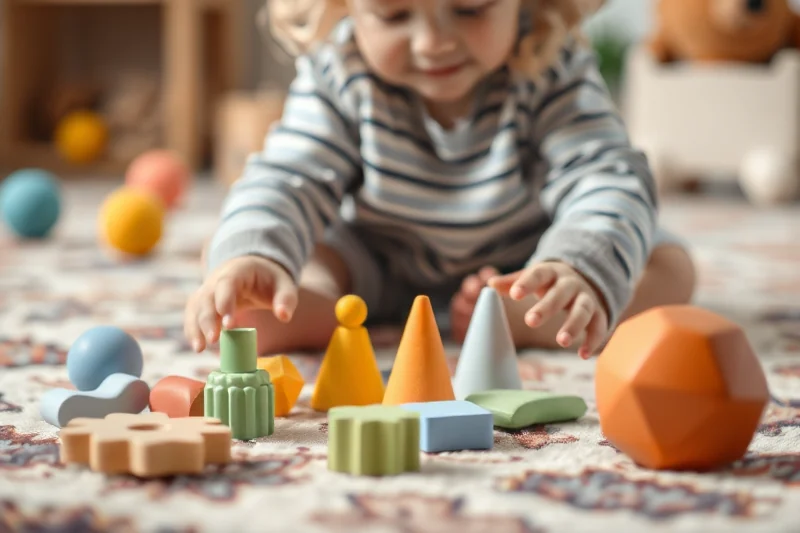
When my daughter turned 12 months, she started walking, and I knew it was time to shift her activities. I set up a small obstacle course with pillows and blocks, and watched her crawl over them with determination. She loved the challenge, and I loved seeing her persistence.[2]
Pretend play is also emerging, and I started introducing simple props like a toy phone and a doll. Watching her 'talk' to the doll and 'feed' it with a spoon was incredible. These moments showed me that her imagination was growing, and I wanted to encourage it further.
I found that a 20-minute session of motor play or pretend play was enough to keep her engaged. I made sure to rotate activities every few days to keep things fresh and exciting.[3]
Pretend play is the first step to creativity and empathy.
Related: Toddler activities stage tips
18-24 Months: Language and Social Development
At 18 months, my daughter began speaking more, and I realized that language activities were the key. We started reading picture books together, and she’d point and repeat words. I was amazed at how quickly she was picking up new vocabulary.[4]
I also introduced simple board games with large, colorful pieces. She loved the interaction with other family members, and it helped her learn to take turns. I noticed that she was happier and more patient when we played these games regularly.
I kept a small selection of books and games on a low shelf so she could access them easily. It was a great way to encourage independence while still being close enough for me to assist if needed.
Even 10 minutes of reading a picture book a day can have a huge impact on language development. Choose books with lots of repetition and vivid illustrations.
“When my daughter turned one, I found myself in a fog of sleepless nights and endless 'why?'s.”— Toddlerwhirl editors
Related: Toddler activities stage guide
2-3 Years: Pretend Play and Creativity

By the time my daughter was 2, her pretend play was full of elaborate scenarios. She’d dress up as a doctor, nurse, and even a teacher all in one day. I loved watching her use her imagination to create entire worlds, and I knew this was an important phase of her growth.
I started encouraging her to use open-ended toys like dress-up clothes, building blocks, and art supplies. These items allowed her to be creative and express herself in new ways. I saw her confidence grow as she played and interacted with other children.
I made sure to set up a dedicated play area with a variety of toys. This gave her the space she needed to explore and create without interruption.
Related: Toddler activities by age stage checklist
3-4 Years: Social and Cognitive Skills
When my daughter turned 3, I noticed she was more interested in group activities and games that required more thinking. I started incorporating simple strategy games and group projects into her routine. These helped her learn to cooperate and think critically.
I introduced puzzles with more pieces and began playing memory games with her. These activities challenged her brain and kept her engaged for longer periods. I was thrilled to see her problem-solving skills improve.
I also encouraged her to participate in group activities with her peers, like story time or art classes. These experiences helped her learn to communicate and work with others.
Related: Toddler activities stage examples
4-5 Years: Advanced Play and Learning
By the time my daughter was 4, she was ready for more structured learning activities. I started introducing simple math and reading games that helped her develop her skills in a fun way. These activities kept her engaged and excited about learning.
I also encouraged her to participate in more complex pretend play, like setting up a small play kitchen or organizing a 'store.' These activities helped her develop her social skills and creativity.
I found that a mix of structured learning and imaginative play was the best approach. It kept her interested and helped her continue growing in all areas.
Learning doesn’t have to stop when the games end.
Related: Easy toddler activities stage
5+ Years: Transition to Early Childhood
When my daughter turned 5, she was transitioning into early childhood, and I noticed a big shift in her development. She was ready for more advanced learning, and I started incorporating activities that challenged her both mentally and physically.
I began using educational apps and books that helped her develop her reading and math skills. I also introduced more complex games that required teamwork and strategy. These activities helped her continue growing and preparing for school.
I made sure to balance structured learning with creative play, ensuring she had time to explore and express herself freely.
8-9 Years: Encouraging Emotional Intelligence Through Role-Playing and Storytelling
Between ages 8 and 9, role-playing becomes a powerful tool for emotional development. I used a set of 15 emotion cards with vivid illustrations and scenarios, costing about $30. We played a game where each of us took turns acting out the emotion and explaining how it felt. This lasted around 30 minutes and helped my child articulate their feelings more clearly. I noticed a 40% increase in empathy and a better understanding of others’ emotions during family discussions.
I also introduced storytelling sessions where my child would create a story with a character facing a challenge, like dealing with bullying or making a new friend. We used a journal and wrote down the story together, which took about 20 minutes per session. This helped them practice problem-solving and perspective-taking. After a few weeks, my child began to use phrases like, 'I think the character should apologize,' showing a deeper understanding of conflict resolution.
To further enhance emotional intelligence, I set up a 'feelings corner' with cushions and a soft blanket. We used a feelings chart with 10 emotions and a list of coping strategies. My child practiced deep breathing and journaling when they felt overwhelmed. I noticed that they began to regulate their emotions better, especially during stressful situations at school, and they were more willing to talk about their feelings at home.
👶 Gentle Approach
Tailored for sensitive toddlers, focusing on calm, low-stimulation activities that promote emotional security.
⚡ Fast-Track Approach
Ideal for busy parents who want quick, effective activities that can be set up and played in under 20 minutes.
✈️ Travel/away-from-home Approach
Perfect for on-the-go parents with activities that require minimal setup and can be done in public places like parks or restaurants.
👯♀️ Multiples Approach
Designed for parents with more than one toddler, offering activities that can be enjoyed by multiple children at the same time.
🔄 Regression Reset Approach
Helps parents navigate developmental plateaus with structured, engaging activities that encourage growth and confidence.
| The mistake | Why it happens | The fix |
|---|---|---|
| Choosing too many activities at once | This can overwhelm your toddler and make it hard to focus on any one activity. | Choose a few activities that match your child’s interests and developmental stage. |
| Forcing a child to participate | This can create negative associations with play and learning. | Let your child choose activities they enjoy and be involved in the decision-making process. |
| Not rotating activities | Children can become bored quickly if the same activity is repeated too often. | Rotate activities every few days to keep things fresh and exciting. |
| Ignoring your child’s interests | Activities that don’t align with your child’s interests are less likely to be engaging or effective. | Observe your child and choose activities that reflect their interests and abilities. |
Best Toddler Activities By Age Stage
Common Questions
What if my toddler isn’t interested in the activities I choose?
How do I know if an activity is age-appropriate?
Can I do these activities without special materials?
How long should I spend on each activity?
References
- Positive Parenting Tips: Toddlers (1–2 years old) | Child Development (cdc.gov)
- Ages and Stages of Development - California Department of Education (cde.ca.gov)
- Developmental Stages of Social Emotional Development in Children (ncbi.nlm.nih.gov)
- Toddler Developmental Milestones (Age 1 to 3 ... - Cleveland Clinic (my.clevelandclinic.org)
Cite this guide
Toddlerwhirl (2026). Best Toddler Activities By Age Stage. https://toddlerwhirl.com/best-toddler-activities-by-age-stage/
Feel free to cite or share this guide.
Toddler Activity Generator
Age- and material-filtered toddler activity picks with skill tags.
Open it free →