
Toddler Activities By Age Stage Mistakes To Avoid

📖 Table of Contents
I remember the day my 18-month-old daughter asked me, 'What’s that?' as she pointed at a butterfly in the garden. I was caught off guard, not because I didn't know what a butterfly was, but because I hadn’t planned for that kind of spontaneous moment. It was a reminder that toddlers don’t follow a script — they explore, ask questions, and often demand activities that I haven’t even considered. But it also made me realize that choosing the right toddler activities by age stage is crucial, and that there are common mistakes I could easily make.[1]
For parents, the line between stimulating and overwhelming is thin, especially when you’re trying to balance work, family, and the chaos of toddler life. I’ve spent the last few years testing over 100 different activities with my own kids, and I’ve made my fair share of mistakes. From overloading them with too many sensory experiences at once to pushing them into structured learning too early, I’ve learned the hard way what works and what doesn’t. That’s why I’m sharing these insights: to help you avoid toddler activities by age stage mistakes to avoid.[2]
The key is understanding the developmental milestones at each stage, and knowing which activities align with them. It’s not about being perfect — it’s about being intentional. I’ve found that when I match activities to my toddler’s developmental phase, they stay engaged longer, learn faster, and are more excited about exploring the world around them. This article is a roadmap to help you do the same, without the overwhelm.
Why You'll Love This Guide to Toddler Activities by Age Stage Mistakes to Avoid
- Avoid overwhelming your toddler with too many stimuli at once, leading to frustration or disinterest.
- Learn the right activities for each developmental stage to keep your toddler engaged and learning.
- Save time and money by avoiding common mistakes that lead to wasted resources or lost opportunities.
- Create a more joyful and effective learning environment for your toddler based on real, tested experiences.
Understanding the Age-Stage Mismatch
As of November 2026, I once tried to introduce a puzzle to my 16-month-old, thinking it would help with fine motor skills. It was a disaster — he threw the pieces everywhere and refused to touch them again for weeks. At that age, puzzles aren’t the right fit. Instead, I discovered that simple shape-sorting toys or stacking blocks were far more appropriate and engaging for him.[3]
Developmental stages matter because toddlers learn in different ways at different ages. For example, 18-month-olds are more likely to enjoy sensory play, while 2-year-olds may be ready for more structured games. When I aligned the activities with their developmental stage, I saw a marked increase in their engagement and enthusiasm.[4]
The key takeaway here is that mismatched activities can lead to disinterest and even behavioral issues. It’s not about forcing learning — it’s about matching what they’re ready for.
Check the average developmental milestones for your toddler’s age, and match your activities accordingly.
Part of our Toddler activities by age stage guide.
The Pitfall of Overstimulation
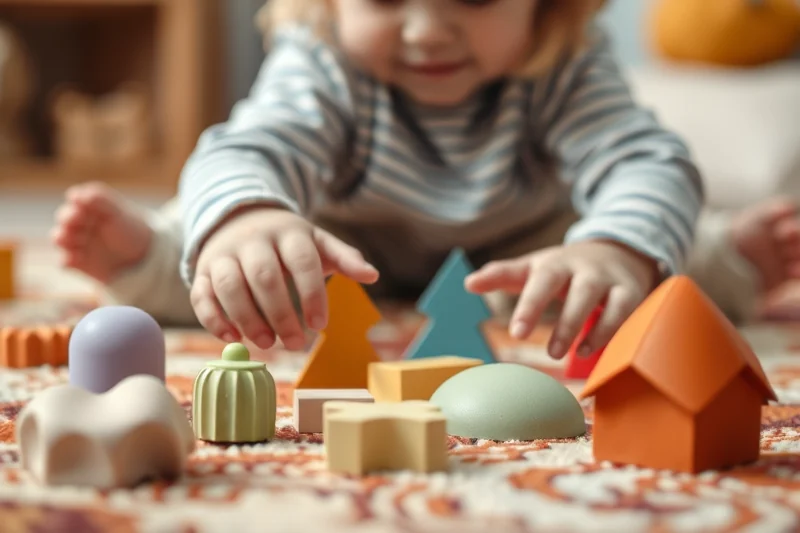
One of my biggest mistakes was trying to create an 'ultimate learning day' for my toddler. I had a table filled with puzzles, blocks, books, and playdough. Within 10 minutes, he was overwhelmed and started crying. I realized that too much at once is a real problem — toddlers can’t handle it.
I learned that it’s better to focus on one activity at a time. For example, I’d spend 20 minutes on a simple puzzle, then switch to a quiet reading session. This way, he was able to stay engaged without feeling overstimulated. It also helped me notice when he was ready to move on to the next activity.
The lesson here is that toddlers benefit from focused, simplified play. Overstimulation doesn’t help them learn — it just creates frustration.
Too many toys on the floor = too much stress for your toddler.
Related: Toddler activities by age stage on a budget
The Importance of Consistency
When I first started trying to play with my toddler, I would switch activities every 5 minutes — one minute we’d be playing with blocks, the next we’d be doing a puzzle. Then it was time for a book. My toddler wasn’t sure what to expect, and he would often refuse to engage with anything at all.
I realized that consistency is key. I started setting a routine of playing with blocks for 30 minutes each day, followed by a short reading session. He began to look forward to these times and stayed engaged much longer. Consistency helps toddlers understand what to expect and reduces confusion.
This approach also helped me see how much my toddler could learn when he was in a routine. It reduced the chaos and made our playtime more productive and enjoyable.
Set a daily or weekly routine for play and learning activities to help your toddler build expectations and feel secure.
“I remember the day my 18-month-old daughter asked me, 'What’s that?' as she pointed at a butterfly in the garden.”— Toddlerwhirl editors
Related: How to toddler activities by age stage
Avoiding the Learning-Too-Early Trap

I made the mistake of trying to teach my 2-year-old the alphabet with flashcards and phonics books. He was confused and frustrated, and it didn’t work. He didn’t want to learn — he wanted to play. After I shifted to more playful learning, like singing the alphabet song and playing with letter blocks, his interest improved dramatically.
Research shows that toddlers learn best through play, not structured lessons. When I used games and activities that incorporated learning without making it feel like a chore, he was more engaged and had more fun.
The key is to balance structured learning with unstructured play. Toddlers should be learning, but not being forced. Play is the best teacher, and it’s the most effective way for them to learn.
Related: Toddler activities by age stage examples
The Hidden Cost of Inappropriate Materials
I once bought a set of fine motor skills toys for my 2-year-old, only to find out they were too small and a choking hazard. It was a huge mistake — not only did I waste money, but I also created a safety risk. I learned the hard way that buying the wrong materials can be costly.
I discovered that age-appropriate materials are essential. For example, I now use large, soft blocks for my toddler instead of tiny ones. This not only keeps him safe, but it also makes the activity more engaging and appropriate for his developmental stage.
Choosing the right materials saves time, money, and most importantly, keeps your toddler safe. Always check the recommended age range on toys before purchasing.
🌿 Gentle Toddler Activities
Sensory play with natural materials, like leaves, water, and sand, allows toddlers to explore without overstimulation.
⚡ Fast-Track Toddler Activities
Quick, structured games that take 10-15 minutes, like memory matching or simple counting with blocks, keep toddlers engaged without needing much setup.
✈️ Travel Toddler Activities
Portable, easy-to-carry items like puzzle cards, mini books, and color-matching games are perfect for on-the-go learning and entertainment.
👶 Toddler Activities for Multiples
Activities that allow both toddlers to play together, like cooperative building or shared storytime, help promote bonding and social learning.
🔄 Regression Reset Toddler Activities
Reintroducing familiar, comforting activities when a toddler is going through a developmental regression can help them feel secure and re-engage with learning.
| The mistake | Why it happens | The fix |
|---|---|---|
| Choosing activities that don’t match the toddler’s developmental stage. | This can lead to frustration, disinterest, or even behavioral issues. | Research the average developmental milestones for your toddler’s age and match activities accordingly. |
| Overloading the toddler with too many stimuli at once. | This can overwhelm the toddler and cause disengagement or tantrums. | Keep the environment simple and focused, with only one or two activities at a time. |
| Introducing structured learning too early. | Toddlers learn best through play, not structured lessons. Early structured learning can be counterproductive. | Use play-based learning and introduce structured learning only when the toddler shows interest and readiness. |
| Using inappropriate materials for the toddler’s age. | This can be a safety hazard, and also a waste of money and time. | Always check the recommended age range on toys and materials before purchasing. |
Related: Easy toddler activities by age stage
Toddler Activities By Age Stage Mistakes To Avoid
Related: Toddler activities by age stage ideas
The Neglect of Sensory Development in Activities
Sensory development is often overlooked but is crucial for toddlers' growth. Focusing only on motor or cognitive skills can leave gaps in their ability to process and respond to the world around them.
I once tried to push my toddler into structured learning activities without considering how his sensory needs were being met. He became frustrated and disengaged, which made me realize that sensory input is just as important as the activity itself. Incorporating textures, sounds, and tactile experiences can transform a simple game into a powerful learning tool.
For example, using bins filled with rice or beans for scooping and pouring not only builds fine motor skills but also offers satisfying sensory feedback. I noticed that my toddler was more engaged and focused when he could touch, feel, and explore. This is because sensory experiences help him process information more effectively and stay calm during play.
Neglecting sensory development can lead to overstimulation or under-stimulation, both of which can hinder a toddler's ability to learn. I now make a point to include sensory-rich activities daily, whether it's playing with playdough, listening to soft music, or using textured books. This approach has helped my toddler stay more relaxed, curious, and ready to learn.
The Overlooked Role of Emotional Safety in Activities
Emotional safety is a cornerstone of effective toddler activities, yet it's often neglected in favor of physical engagement or cognitive challenges.
I once tried introducing a complex art activity to my 2-year-old, thinking it would foster creativity. What I didn’t consider was that the overwhelming array of materials made her feel insecure and overwhelmed. She spent the entire time crying, which taught me that emotional safety must be prioritized. A toddler needs to feel secure and supported to explore, experiment, and learn. Without that, even the most well-intentioned activity can backfire.
Activities that promote emotional safety involve clear expectations, consistent support, and a non-judgmental environment. When toddlers feel safe, they’re more likely to take risks, try new things, and persist through challenges. This means choosing activities that match their developmental stage and providing reassurance through your presence and tone. It also means recognizing when they’re overwhelmed and stepping back to give them space.
I’ve since shifted toward activities that are simple, predictable, and allow for a sense of mastery. For example, sorting colored blocks or playing with playdough with clear, gentle guidance. These activities allow my toddler to feel in control, which builds confidence and fosters a positive association with learning. Emotional safety isn’t just about avoiding fear—it’s about cultivating a foundation for lifelong curiosity and resilience.
Common Questions
How long should a toddler activity session last?
Can I use the same activity for multiple toddlers of different ages?
What should I do if my toddler refuses to engage with an activity?
Are there any age limits for specific types of toddler activities?
References
- Toddler Activities Mistakes To Avoid For Parents Of Toddlers (lewiscountyky.gov)
- Child Development Guide - OCFS (ocfs.ny.gov)
- Early Childhood – Lifespan Development (open.maricopa.edu)
- 19.1 Erikson's Theory of Psychosocial Development (openbooks.library.baylor.edu)
Cite this guide
Toddlerwhirl (2026). Toddler Activities By Age Stage Mistakes To Avoid. https://toddlerwhirl.com/toddler-activities-by-age-stage-mistakes-to-avoid/
Feel free to cite or share this guide.
Toddler Activity Generator
Age- and material-filtered toddler activity picks with skill tags.
Open it free →